At its core, primary school tutoring is about giving your child focused, one-on-one academic support to help them flourish. Think of it like a personal trainer for your child’s education. While the classroom is a fantastic group fitness session, a tutor creates a tailored program designed to build up specific skills and, just as importantly, boost their confidence.
What's Really Behind Primary School Tutoring?
Fundamentally, primary school tutoring is a partnership between the tutor, your child, and you. It goes so much deeper than just getting through tonight’s homework. The real goal is to get to the bottom of any learning roadblocks, strengthen those all-important foundational skills, and help your child build a genuine belief in their own abilities.
It’s a common misconception that tutoring is only for students who are falling behind. In reality, it's a powerful and proactive tool for any child to get the most out of their education and truly shine.
Think about a typical classroom with 25 students. The teacher does an amazing job explaining a new maths concept, but it's inevitable that a few kids won't quite get it straight away. One child might be a visual learner who needs to see diagrams, another might need to work through problems at a slower pace, and a third may have missed a crucial building block from last year. With so many students and only so much time, a teacher can't always provide that specific, individualised attention.
That’s where a tutor steps in to bridge the gap. They can re-explain a concept using different methods, go back to fill in any missing pieces of knowledge, and offer the patient practice needed for an idea to finally click into place. This targeted support is what makes it so incredibly effective.
Why More and More Parents are Turning to Tutoring
This kind of focused support is becoming increasingly popular across Australia. It’s no longer seen as a last resort, but as a smart investment in a child’s entire educational journey. Recent years have really shown how easily learning gaps can appear, and families are looking for ways to make sure their kids feel confident and stay on track.
The statistics back this up. In 2019, Australia's tutoring industry was already valued at around $1.3 billion, with almost one in four families using a private tutor. More recently, data revealed that 35% of all new tutoring students in 2023 were in primary school (Prep to Year 6)—a significant jump from 29% the previous year. You can find more helpful advice on what to look for when choosing a tutor on EducationDaily.au. It’s a clear sign that parents are seeing the long-term value of early support.
The Benefits Go Far Beyond Better Marks
While seeing an improvement on the report card is often what gets parents started, the real magic of primary school tutoring extends much further. The right support can completely reignite a love for learning that might have been dimmed by struggles in a busy classroom.
Here's a quick look at some of the key advantages tutoring can offer your child.
Tutoring Benefits at a Glance
| Benefit Category | What It Means for Your Child |
|---|---|
| Boosted Confidence | As they master concepts they once found tricky, their self-esteem soars. This new confidence often spills over into other parts of their school and social life. |
| Stronger Core Skills | Tutoring carves out dedicated time to lock in the fundamentals of reading, writing, and maths—the building blocks for every subject that follows. |
| Personalised Learning Pace | A tutor can speed up when your child gets a topic quickly and slow right down for things that need more practice, ensuring they feel challenged but never overwhelmed. |
| A Safe Space for Questions | Some children feel too shy to put their hand up in class. A one-on-one setting creates a safe, judgement-free zone where they feel comfortable saying, "I don't get it." |
Ultimately, these benefits work together to create a more resilient, engaged, and happy learner, setting your child up for a smoother and more successful journey through the rest of their school years.
Signs Your Child Might Need a Tutor
Figuring out if your child needs extra support isn't always as simple as glancing at a report card. While a drop in grades is a clear signal, some of the most important clues are more subtle, showing up in their behaviour and how they feel about school. Spotting these signs early is the first real step to getting them the right help.
It’s important to see these challenges not as failures, but as common hurdles on the learning path. They're simply signs that a different, more personalised approach—the kind that primary school tutoring offers—could make all the difference. When you know what to look for, you can be proactive and support their journey with confidence.
Academic and Homework-Related Signs
Often, the most obvious signs surface in your child's schoolwork and study habits at home. One late assignment isn’t a reason to panic, of course. But a consistent pattern of difficulty can point to an underlying gap that a tutor can help close.
Keep an eye out for these common academic red flags:
- Consistently Slipping Grades: A noticeable dip in marks, whether it’s in one particular subject or right across the board, is a classic sign that something isn't quite clicking for them.
- Lengthy Homework Battles: Does homework regularly end in tears or frustration? If it’s taking far longer than it should, it often means your child lacks the foundational skills or confidence to get it done on their own.
- Poor Time Management: Constantly struggling to start tasks, getting distracted easily, or being unable to organise their books and materials can signal challenges with executive functioning skills.
These are just a handful of examples. You can learn more about how to identify when your child is struggling and how tutoring can help in our detailed article.
It's worth remembering that ongoing difficulty with homework is rarely about defiance. It’s much more likely a cry for help, a signal that your child feels completely overwhelmed by the material and just doesn't know where to start.
Emotional and Behavioural Cues
Sometimes, the most telling signs have very little to do with marks and everything to do with your child’s mindset. A happy, engaged learner who suddenly becomes withdrawn or anxious is trying to tell you they need support, even if they don't have the words for it.
These emotional shifts are every bit as important as academic struggles. Pay close attention if you notice changes in your child's behaviour or general attitude towards school.
Consider these emotional warning signs:
- A Sudden Drop in Confidence: Hearing phrases like "I'm just bad at maths" or "I'm too dumb for this" is heartbreaking, and it shows that repeated struggles are starting to chip away at their self-esteem.
- Disinterest in Favourite Subjects: When a child loses passion for a subject they once loved, it’s a powerful indicator that they're feeling lost or frustrated in that class.
- Increased School-Related Anxiety: A new reluctance to go to school, frequent complaints of a sore tummy on school mornings, or general nervousness about tests are all significant red flags.
- Actively Avoiding Schoolwork: "Forgetting" about assignments or finding creative excuses to dodge homework is often a coping mechanism for feeling completely overwhelmed.
Recognising these academic and emotional patterns allows you to step in with a supportive solution like primary school tutoring before small struggles become major roadblocks to your child's success and happiness.
Finding the Right Tutoring Model for Your Family
Choosing the right kind of primary school tutoring can feel a lot like planning a trip. Do you need the direct, tailored route of a private car? The cost-effective and social dynamic of a carpool? Or the structured, reliable schedule of a train? Each gets you where you need to go, but the best choice really depends on your child's personality, your budget, and your family's schedule.
The world of primary tutoring offers a similar range of options. Taking a moment to understand these different models is the key to finding that perfect fit for your child's learning style and your family's life. There’s no single “best” way—only the one that works best for you.
One-on-One Private Tutoring: The Personalised Journey
Think of one-on-one private tutoring as having a personal guide dedicated entirely to your child's academic journey. This approach offers a direct, customised path to their learning goals. Every single session is shaped around their specific strengths, the areas they find tricky, and their unique pace of learning.
If your child is getting tangled up in a particular maths concept or needs intensive support to build their reading confidence, the tutor can dedicate the entire time to that one area. This highly focused method is ideal for students who need to catch up, those who get easily distracted in a group, or kids with specific learning needs. The entire lesson revolves around them, ensuring they get the undivided attention they need to thrive.
To learn more about this approach, you can explore the many benefits of one-on-one primary school tutoring in our dedicated guide.
Small Group Sessions: The Shared Ride
Small group tutoring is like a friendly carpool. It strikes a wonderful balance between personalised attention and the power of learning with peers. These sessions, usually with just two to five students, let children learn from each other, share different ways of thinking, and see that they aren't the only ones who find certain topics tough.
This format is often more affordable than private tutoring and can be a fantastic option for students who blossom in a social setting. It still gives them targeted support from the tutor while naturally building confidence, communication skills, and teamwork. For many kids, seeing a classmate have that "aha!" moment is what makes a difficult concept finally click into place.
Tutoring Centres: The Structured Network
A traditional tutoring centre operates a bit like a public transport network with set routes and timetables. These centres usually offer a highly structured curriculum, often designed to align closely with the Australian school system, and follow a pre-planned program of study.
This model is excellent for general academic reinforcement and for specific goals like NAPLAN preparation. The sessions happen at a physical location on a fixed schedule, providing a routine and a formal, school-like environment that helps some children focus. The trade-off, however, is often less flexibility and a more one-size-fits-all approach compared to personalised tutoring.
The image below shows the kind of subject-specific improvement that focused tutoring can deliver.
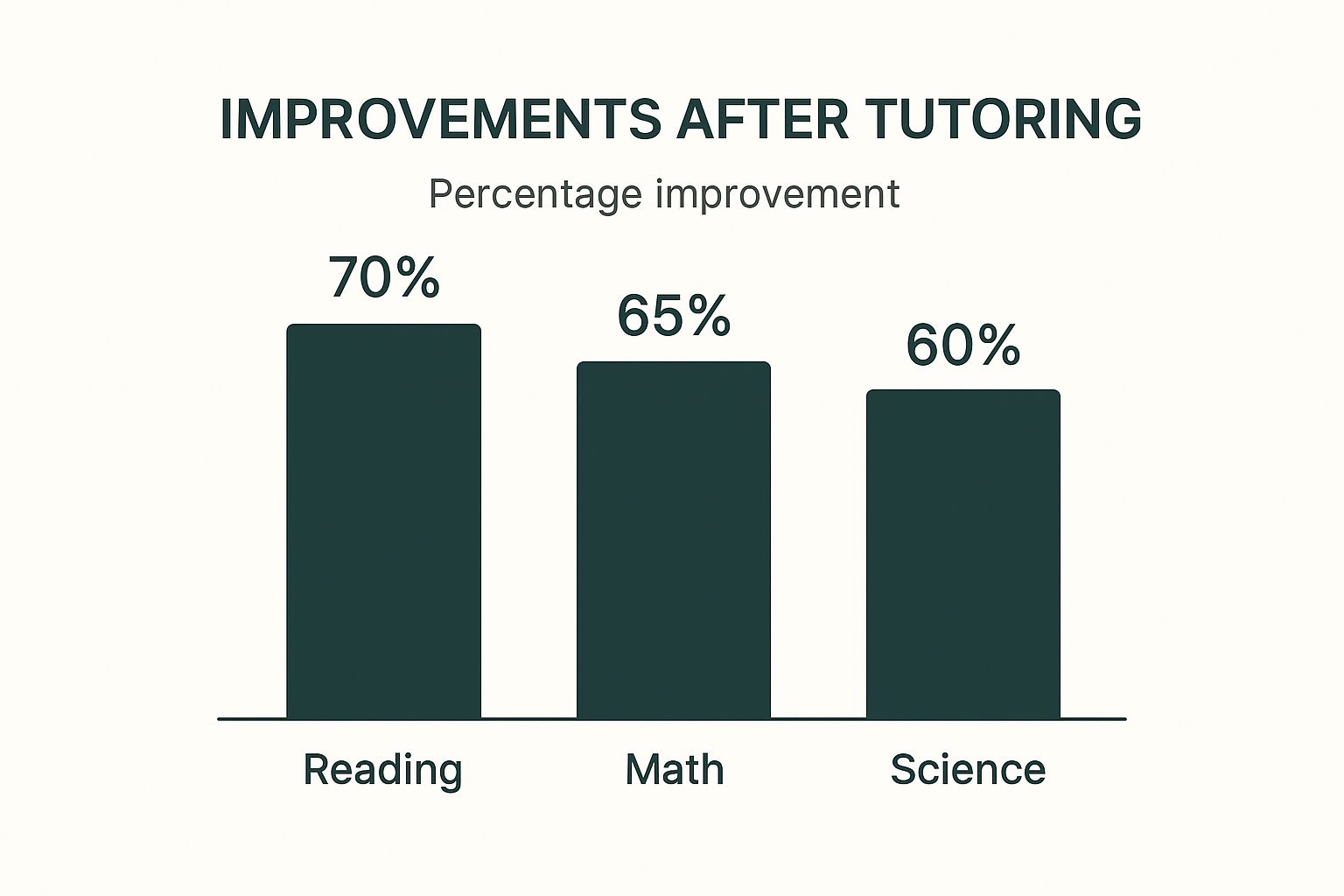
As you can see, targeted support can lead to really positive gains across the core subjects in primary school.
Online Tutoring: The Flexible, On-Demand Option
Online tutoring is the modern, super-flexible choice—it's like a ride-sharing service that comes right to you, wherever you happen to be. This model has become incredibly popular because it offers access to expert tutors from anywhere in Australia, eliminating travel time and fitting neatly into busy family schedules.
Thanks to high-quality digital tools, online sessions are just as interactive and engaging as in-person ones. The growth here is a huge part of the Australian tutoring industry, which was valued at over $1.2 billion in 2020. Today, it's estimated that about 1 in 7 Australian students gets some kind of tutoring, and online platforms have made it more accessible than ever. This model is a game-changer for families in regional areas or anyone who needs that extra bit of flexibility.
Comparison of Tutoring Models
To help you weigh up the options, we’ve put together a simple table comparing the different models. This should make it easier to see which format might be the best fit for your child and family.
| Tutoring Model | Best For | Potential Drawbacks | Typical Cost (AU) |
|---|---|---|---|
| One-on-One Private Tutoring | Students needing intensive, focused support or those with specific learning needs. | Can be the most expensive option; relies heavily on the tutor-student relationship. | $50 – $100+ per hour |
| Small Group Sessions | Social learners who benefit from peer interaction and collaborative problem-solving. | Attention is shared; pace might be too fast or slow for some individuals in the group. | $30 – $60 per hour |
| Tutoring Centres | General academic reinforcement and structured exam preparation (e.g., NAPLAN). | Less personalised; fixed schedules and a more rigid curriculum. | $40 – $80 per hour |
| Online Tutoring | Families needing maximum flexibility, those in remote/regional areas, or tech-savvy kids. | Requires a reliable internet connection and self-discipline; may not suit all learning styles. | $40 – $90+ per hour |
Ultimately, the goal is to find an environment where your child feels comfortable, supported, and ready to learn. Considering these different approaches is the first step toward unlocking their full potential.
How to Choose the Right Tutor for Your Child
Finding the right person for primary school tutoring isn't just about ticking boxes on a resume. It’s about finding a true partner in your child's education—someone who can connect with them, understand their unique needs, and genuinely inspire them to learn. This decision is all about getting the blend of qualifications, personality, and teaching style just right.
Think of it like picking a coach for your child's sports team. You wouldn’t just look for someone who knows the rules; you’d want a great communicator who builds confidence and motivates the players. Taking a considered approach to your search will help you find that perfect match who can make a real, lasting difference.
Starting Your Search for the Best Tutors
The first step is simply knowing where to look. When it comes to finding high-quality, reputable tutors, starting within your own community and trusted networks can give you incredible peace of mind.
Here are some of the most reliable places to begin your search:
- Reputable Tutoring Agencies: Going through a specialised agency like Evergreen Tutoring Services means the initial vetting is already done for you. They have a pool of qualified tutors who are experienced across different subjects and learning needs, so you can be confident in a certain standard of professionalism.
- School Recommendations: Your child’s teacher or school guidance counsellor is an excellent resource. They know your child's learning style firsthand and can often suggest tutors or services that have helped other students at the school.
- Word-of-Mouth: Don’t underestimate the power of asking other parents. A glowing review from a friend whose child has had a great experience is one of the strongest endorsements you can get.
Once you have a shortlist of names, it's time to dig a little deeper to make sure they're the right fit for your family.
Key Questions to Ask During the Interview
The interview is your chance to see beyond the CV. This conversation is absolutely crucial for figuring out if a tutor’s teaching philosophy clicks with your child's personality and your family's goals. Don't be shy about asking detailed questions to get a clear picture.
Your goal is to move past the resume and understand how they actually operate in a teaching scenario. A fantastic tutor won't just list their qualifications; they'll be able to articulate their methods clearly and show a genuine passion for helping students succeed.
Here are some essential questions to guide your chat:
- What is your teaching philosophy? This helps you understand their core beliefs about learning. Do they lean towards rote memorisation, or do they focus on building a deep, conceptual understanding?
- What experience do you have with students of my child's age and specific needs? Experience is key. Whether your child needs help with Year 2 reading or Year 5 maths, you want someone who has been there before.
- How do you assess a new student's starting point? A great tutor will have a clear process for identifying a child's strengths and knowledge gaps before they even start teaching.
- How will you communicate progress with us? Look for a commitment to regular, clear feedback. This could be a quick chat after each session or a more formal weekly email update—whatever works for you.
- Can you provide a current Working with Children Check? In Australia, this is a non-negotiable requirement for anyone working with children. Never, ever compromise on this vital safety check.
The Importance of the Right Personality Match
While qualifications and experience are the foundation, they’re only part of the story. Often, the single biggest factor for successful primary school tutoring is the personal connection between the tutor and your child. A positive, encouraging relationship builds the trust needed for real learning to flourish.
Your child needs to feel comfortable enough to admit, "I still don't get it," without any fear of being judged. A tutor who is patient, engaging, and genuinely warm can transform a tutoring session from a weekly chore into something your child actually looks forward to.
When it comes time to make the final call, trust your gut. If you and your child get a good feeling from a particular tutor, that positive connection will likely be the start of a wonderful and productive learning journey.
Getting the Most from Your Tutoring Sessions

Signing your child up for a tutor is a fantastic first step, but the real magic happens when it’s a team effort. When you actively participate in the process, you can seriously amplify the benefits of primary school tutoring and make sure your investment leads to lasting success.
Think of yourself as a vital part of your child’s support crew. Your job isn’t to become a second teacher, but to create the best possible conditions for learning to flourish. This means working with the tutor to set clear goals, keeping the lines of communication open, and helping your child feel ready and focused for each session. This partnership turns tutoring from a simple service into a powerful, integrated part of their education.
Creating a Strong Communication Triangle
Great tutoring is built on clear, consistent communication between you, your child, and the tutor. This three-way conversation is the key to making sure everyone is on the same page about goals, progress, and any little hurdles that pop up. Don’t wait for a formal report; make communication an ongoing, natural habit.
Check in with the tutor regularly. A quick five-minute chat after a session or a short weekly email can give you priceless insights into what your child is working on and where they’re shining. Just as important is chatting with your child about their lessons. Ask open-ended questions like, “What was the most interesting thing you learned today?” to get a real feel for how they’re finding it.
This open channel of communication is absolutely vital. It helps the tutor fine-tune their approach based on your child’s feedback and gives you the info you need to support their learning at home.
Preparing Your Child for Success in Each Session
Just like an athlete warms up before a big game, a little preparation helps your child get into the right headspace for their tutoring session. A calm, focused student will always get more out of the experience than one who feels rushed or stressed.
A few simple things can make a huge difference:
- Create a Quiet Space: Make sure the session happens in a calm spot, away from distractions like the TV or noisy siblings.
- Have a Pre-Session Snack: A hungry child is a distracted one. A light, healthy snack beforehand boosts focus and energy.
- Talk Positively About Tutoring: Frame the sessions as a positive chance to build new skills and feel more confident. Your attitude shapes theirs. Building this self-belief is a key outcome, and you can learn more about tutoring for confidence in our guide.
Reinforcing Learning Without Adding Pressure
Your role after a session is to gently reinforce what they’ve learned—not to drill or test them. The goal is to show how the concepts they’re learning pop up in everyday life, which helps the knowledge really stick.
For example, if they worked on fractions in maths, ask for their help cutting a pizza into equal slices. If they focused on descriptive writing, ask them to describe a character from their favourite show. These small, low-pressure activities make learning feel natural and fun.
Consistency is also key. Research following a large-scale Victorian tutoring program highlighted that for tutoring to be truly effective, it needs to be delivered with fidelity, including consistent session frequency and duration. You can discover more insights about how structured approaches improve tutoring outcomes at Grattan Institute.
Your Top Questions About Primary School Tutoring Answered
Dipping your toes into the world of primary school tutoring can feel a bit daunting at first. It’s totally normal to have a heap of questions about how it all works, from costs to scheduling and everything in between.
Think of us as your friendly guide. We’ve heard all the common questions from Australian parents just like you, and we’re here to give you the clear, straightforward answers you need to make the best decision for your family.
How Much Does Primary School Tutoring Cost in Australia?
This is usually the first question on every parent's mind, and for good reason! The cost of primary school tutoring in Australia isn't a one-size-fits-all figure. It really depends on what you’re after—much like choosing between a quick café lunch and a fancy three-course meal.
The price tag is shaped by things like the tutor's experience, the subject, and the style of tutoring. For example, getting specialised support for a child with specific learning needs will naturally be a different investment than general homework help.
To give you a ballpark idea, here’s a general guide to what you can expect to pay:
- Private One-on-One Tutors: For this highly personalised approach, you’re typically looking at $50 to $100+ per hour. Tutors with years of teaching experience or specialised skills will often be at the top end of that range.
- Small Group Sessions or Tutoring Centres: A great, often more budget-friendly option, with prices usually landing between $30 and $80 per hour, depending on the size of the group.
- Online Tutoring Platforms: These offer fantastic flexibility and can range anywhere from $40 to over $90 per hour. The big advantage here is the massive pool of qualified tutors you can access from all over the country.
It's also a smart move to see if you qualify for any government funding. Programs like the National Disability Insurance Scheme (NDIS) can sometimes cover tutoring if it directly supports your child's learning goals.
What Is the Ideal Frequency for Tutoring Sessions?
Finding the right rhythm for tutoring isn't about a magic number—it’s about your child’s individual needs and what you’re hoping to achieve. Are you playing catch-up, trying to get ahead of the curve, or prepping for something specific like NAPLAN?
The golden rule here is consistency over intensity. For primary-aged kids, shorter, more frequent sessions are miles more effective than long, drawn-out ones. Their attention spans are still developing, and regular reinforcement is what helps new ideas stick. It’s like watering a plant: a little bit of water often is far better than a massive flood once a week.
Research consistently shows that "high-dosage" tutoring—meaning frequent, consistent sessions—delivers the best results. For a child needing to bridge a significant learning gap, studies suggest that sessions at least two to three times per week can lead to months of additional learning over a school term.
For most primary school students, a 45 to 60-minute session is the sweet spot. It’s long enough to get stuck into a topic properly but short enough to keep them focused and energised.
Will Tutoring Add Too Much Pressure on My Child?
This is such an important and valid worry. The school day is already packed, and the last thing any parent wants is to pile on more stress. But here’s the thing: good tutoring should actually relieve academic pressure, not add to it.
Think about where the stress really comes from. It’s that feeling of being lost in class, not understanding the homework, or panicking about an upcoming test. A great tutor acts like a pressure valve. They create a safe, supportive space where your child can finally say, "I don't get it," ask all the "silly" questions, and work things out without feeling judged.
When a tutor helps build skills, confidence naturally follows. As your child starts to grasp concepts they once found impossible, that school-related anxiety starts to melt away.
Here’s how you can keep the experience positive and empowering:
- Frame it positively: Talk about tutoring as getting a "personal coach" for school, just like they have a coach for footy or gymnastics.
- Keep checking in: Ask your child how they're finding it. Do they click with their tutor? Is it helping them feel better about school?
- Find the right fit: A patient, fun, and encouraging tutor will make sessions feel like a boost, not a burden.
What Is the Difference Between Tutoring and Homework Help?
This is a fantastic question because it gets right to the heart of what makes tutoring so powerful. While a tutor will definitely help get the homework done, their job goes so much deeper than that.
Let’s use an analogy. Imagine your child is hungry.
Homework help is like giving them a sandwich. It solves the immediate problem, but they’ll just be hungry again tomorrow.
Tutoring is like teaching them how to cook. It’s about giving them the skills and confidence to feed themselves for life.
Here’s a simple breakdown of the difference:
| Aspect | Homework Help | Primary School Tutoring |
|---|---|---|
| Main Goal | Completing today's assigned tasks. | Fixing the underlying knowledge gaps and building foundational skills. |
| Focus | Short-term: "What's the answer to this question?" | Long-term: "Why is this the answer, and how can you solve it yourself next time?" |
| Outcome | The homework gets finished. | The student becomes a more confident, independent, and capable learner. |
A good tutor uses homework as a starting point. If they spot a struggle with a maths problem, they won’t just give the answer. They’ll dig deeper, re-teach the core concept, and make sure your child truly understands it before moving on. That's how real, lasting confidence is built.
Are you ready to give your child the personalised support they deserve? At Evergreen Tutoring Services, our expert tutors create customised learning plans that build skills, boost confidence, and foster a genuine love for learning. Discover how our one-on-one online tutoring can make a difference for your child today.