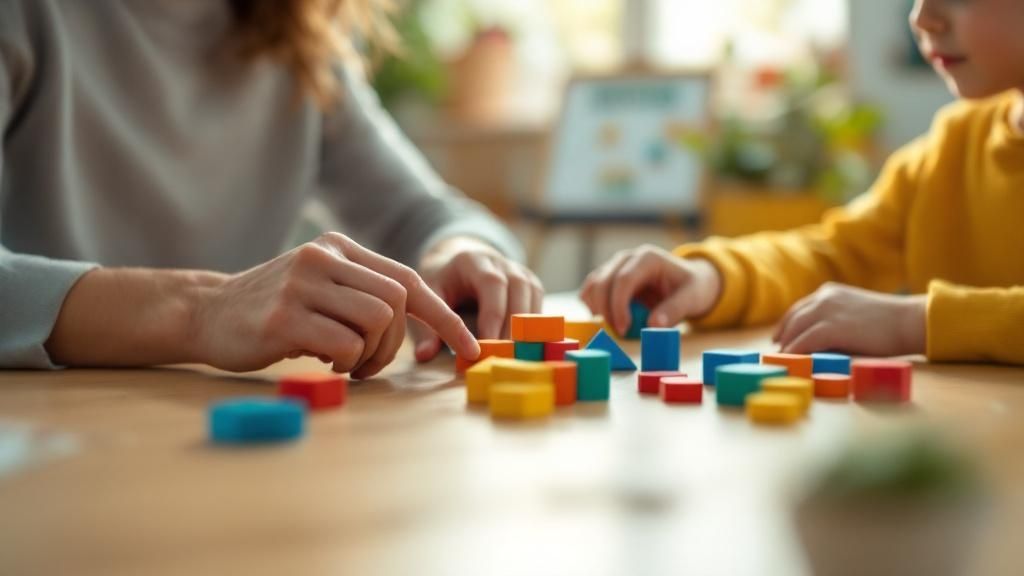
Put simply, what is kinesthetic learning? It's learning by doing. Think about learning to ride a bike—no amount of reading or watching videos can ever replace the real-world feeling of balancing on the seat and pushing the pedals. For a kinesthetic learner, that same principle applies to just about everything, from maths to history.
Understanding Kinesthetic Learning Through Action
Many students feel like a square peg in a round hole in traditional classrooms, which tend to favour listening and reading. They might fidget in their seats, get restless during long-winded lectures, or find it impossible to remember information they haven't physically engaged with.
This isn't a sign of a poor attention span. More often than not, it's a clear signal that they have a kinesthetic learning preference.
For these hands-on learners, movement isn't a distraction—it’s a crucial part of how they think and process information. Their brains forge the strongest connections to new ideas when their bodies are part of the learning journey. This style, sometimes called tactile learning, is all about gaining knowledge through physical activity rather than just sitting back and observing.
A significant number of students in Australia lean towards this hands-on approach. Research following the periods of remote schooling, for instance, found that Australian students who identified as kinesthetic learners felt their academic performance was hit hard by virtual learning. You can read more about these findings from Flinders University.
Kinesthetic learning goes far beyond rote memorisation. It’s about building muscle memory for concepts, turning abstract ideas into tangible experiences that are much, much harder to forget. This is what makes it such a powerful tool for deep, lasting comprehension.
This next chart does a fantastic job of showing just how much more effective active learning methods are for retaining information when compared to more passive approaches.
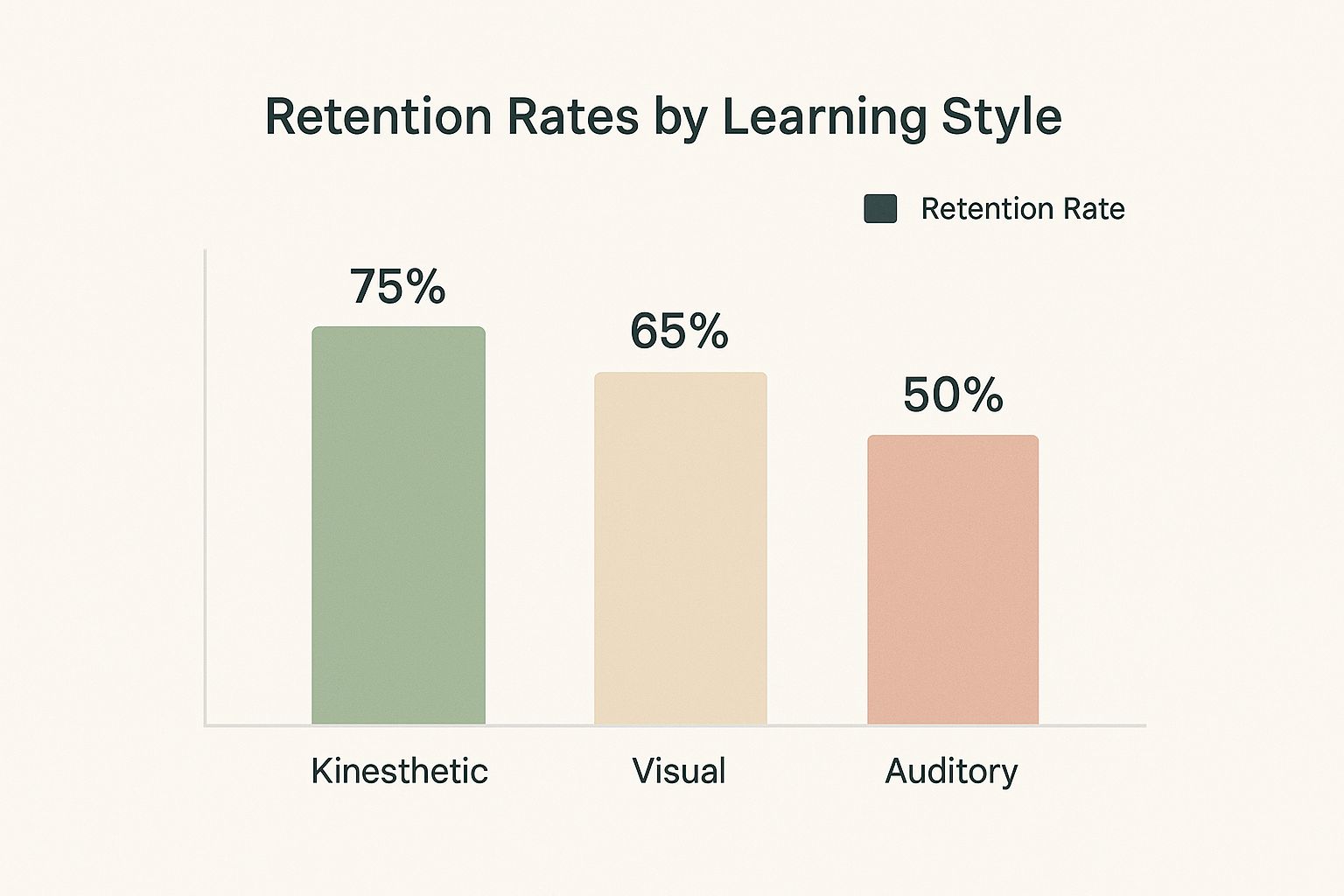
As the data makes clear, learning by doing leads to a massive 75% retention rate, which is worlds apart from the results seen with visual and auditory styles alone.
To get a clearer picture, let's quickly compare kinesthetic learning to the more traditional methods you'd find in a typical classroom.
Kinesthetic vs Traditional Learning Approaches
| Attribute | Kinesthetic Learning | Traditional (Auditory/Visual) Learning |
|---|---|---|
| Primary Method | Physical activity, hands-on tasks, movement | Listening to lectures, reading texts, watching |
| Student Role | Active participant, experimenter | Passive recipient of information |
| Focus | "Learning by doing" | "Learning by observing/listening" |
| Engagement | High, driven by physical interaction | Can be low, especially for restless students |
| Memory | Strong, tied to physical experience | Relies on abstract recall and memorisation |
This table really highlights the core difference: one is about active creation and experience, while the other is about passive consumption of information.
The Power of a Physical Connection
So, what makes this "learning by doing" method so incredibly effective? When a student builds a model of a plant cell, acts out a scene from a historical event, or uses blocks to figure out a tricky maths problem, they're creating a rich, multi-sensory memory.
This physical interaction fires up different parts of the brain at once, solidifying neural pathways in a way that simply reading a textbook never could.
This approach brings some huge advantages to the table:
- Improved Memory: When you physically perform a task, you create stronger, longer-lasting memories. It’s the difference between reading a recipe and actually baking the cake.
- Enhanced Problem-Solving: Learners can physically manipulate objects and variables to see immediate, concrete results, which builds real-world problem-solving skills.
- Increased Engagement: Active participation transforms learning from a passive chore into an exciting activity, which naturally boosts focus and motivation.
By recognising and embracing this learning style, educators and tutors can completely change a student's academic journey. Instead of fighting a child's natural urge to move, we can channel it into productive, effective learning strategies that finally unlock their true potential.
Do You Have a Kinesthetic Learning Style?
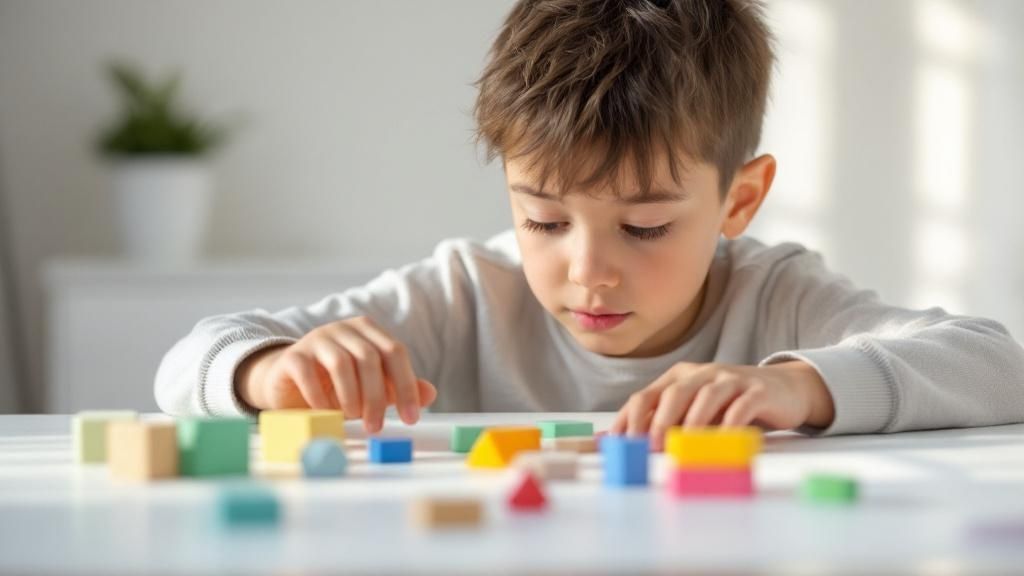
Figuring out if you or your child has a kinesthetic learning style goes much deeper than just noticing a bit of extra energy. It's about seeing that some people need to connect with information through physical action, not just by watching or listening. These learners aren't simply ‘hyperactive’; their brains are wired to make sense of the world through movement and touch.
A classic example is the student who can't for the life of them memorise the planets from a textbook diagram but can name them all in order after building a simple model of the solar system. They aren't just playing around. They're actively cementing information in a way that clicks for them. The physical act of placing each planet in its orbit creates a tangible, lasting memory that a flat picture could never compete with.
Common Signs of a Kinesthetic Learner
So, what are the tell-tale signs of a kinesthetic preference? These behaviours are often mistaken for a short attention span, but they’re actually clues to a really effective and powerful way of thinking.
Keep an eye out for these indicators:
- Constant Movement: This can be as subtle as tapping a pen, bouncing a foot, or fiddling with an object while trying to listen. This isn’t a distraction—for them, it’s a way to stay focused.
- Preference for Active Projects: They absolutely shine when they’re given tasks that involve building, creating, or experimenting. Give them a diorama to build or a science experiment to conduct, and they'll engage in a way they never could with a worksheet.
- Excellent Muscle Memory: These learners often have an almost uncanny knack for remembering things they've physically done. They might nail a complex dance move, a play in sport, or how to put something together after doing it just once.
It's so important to reframe these behaviours. Instead of seeing a child who can't sit still, we should see a learner who thinks best on their feet. This shift in perspective is the first step toward unlocking their true academic potential.
Kinesthetic Learners in Australia
This learning style isn’t a rare quirk; it’s a huge part of our educational landscape. Studies looking into how Australian students learn show that a significant number have a real need for hands-on engagement. In fact, research shows that kinesthetic preferences are common enough in the Australian student population to be considered a key learning style, not just an outlier. If you’d like to dive into the data, you can read the full research on Australian learning styles.
Understanding what is kinesthetic learning means recognising that for these students, the body is a tool for the mind. By embracing this, tutors at Evergreen Tutoring Services can help students turn what might look like a challenge into a remarkable strength, guiding them toward strategies that work with how they naturally learn best.
Why Hands-On Learning Boosts Academic Success
Taking a kinesthetic approach does more than just make learning fun—it makes it stick. When a student learns by doing, they aren’t just passively taking in information. They’re actively forging powerful, lasting connections in their brain. This hands-on style is a direct path to better academic results.
Think of memory like trying to make a path through a dense forest. Just reading a fact is like brushing a few leaves aside; it’s a start, but the path is easily lost. A kinesthetic activity, on the other hand, is like laying down solid paving stones. Each physical action—like building a model, running an experiment, or acting out a historical scene—cements the concept in place. This creates much stronger, action-based neural pathways that are easier to revisit.
Better Memory and Deeper Thinking
This physical engagement has a dramatic effect on how well students retain information. In fact, studies show learners can remember up to 75% of information when they are actively involved in a task. That’s a huge leap compared to the much lower rates from just listening or reading. The magic happens because the brain links an abstract idea to a concrete, physical experience.
But it goes beyond just memory. This process also sharpens critical thinking and problem-solving skills. When a student physically changes variables in a science experiment or uses blocks to figure out a maths problem, they aren't just memorising an answer. They're discovering the why behind it, learning to analyse, adapt, and find solutions on their own.
Kinesthetic learning turns students from passive observers into active scientists, historians, and mathematicians. It gives them the power to test theories and see the immediate results of their actions, building a foundational understanding that rote learning can't match.
Fuelling Motivation and Engagement
Let's face it, turning study into an active pursuit is also a massive motivator. For many students, especially those who find it hard to sit still, traditional study methods can feel incredibly tedious and draining. Hands-on activities are naturally more engaging, which helps them stay focused and driven.
This boost in motivation is crucial for academic success, directly impacting grades and understanding in even the toughest subjects. Knowing how to keep students actively involved is key, and there are many proven ways to achieve this. For more great ideas on this, check out our detailed guide on effective student engagement strategies.
At Evergreen Tutoring Services, we use these exact principles to make sure learning is not only effective but also enjoyable and memorable.
Practical Strategies for Kinesthetic Learners
Realising you or your child is a kinesthetic learner is a brilliant first step. The real magic, though, happens when you start putting that knowledge into practice. With the right strategies, study sessions can go from being a frustrating chore to an exciting, genuinely effective experience. The secret is to turn abstract ideas into something tangible and physical.
And the good news? This doesn't mean you need fancy equipment or a huge budget. Simple, clever adjustments can make a world of difference across all subjects, helping students build knowledge in a way that feels completely natural to them.
Subject-Specific Kinesthetic Techniques
Different subjects naturally call for different hands-on approaches. A kinesthetic learner absolutely thrives when they can physically move and manipulate the elements of what they're studying, transforming ideas into real-world objects or actions.
Here are a few powerful, easy-to-try strategies for core subjects:
- For Maths: Step away from the worksheets. Use physical objects like coins, Lego bricks, or even slices of an apple to get a real feel for addition, subtraction, and fractions. When tackling geometry, building shapes with toothpicks and marshmallows makes angles and forms concrete.
- For English: Get physical with language. Use Scrabble tiles or magnetic letters on the fridge to build new vocabulary words. When a student needs to memorise a speech or poem, encourage them to pace around the room or even act out the emotions behind the words. This helps lock it into memory.
- For Science: This is a natural fit for hands-on learning! Building a model of a plant cell out of play-doh, creating a solar system mobile, or doing simple kitchen-safe experiments makes scientific principles real and unforgettable.
- For History: Bring the past to life. Roll out some butcher paper and create a massive timeline on the floor that your child can literally walk along. Role-playing key historical moments or building dioramas of famous battles helps details stick far better than just reading them from a book.
The goal here isn't just about keeping busy hands occupied. It's about creating a physical anchor for every new piece of information. When a student physically builds a word or acts out an event, they forge a multi-sensory memory that is far stronger and easier to recall later on.
Integrating Movement and Interest
Beyond these subject-specific tactics, general strategies that weave in movement and personal interests are incredibly effective. Simply allowing for frequent "brain breaks" for a student to stretch, walk around, or do a few star jumps can reset their focus far better than forcing them to sit still.
Tracing letters and numbers with a finger in a tray of sand or shaving cream is a classic tactile technique for younger learners. For older students, using a large whiteboard or big sheets of paper encourages bigger, more expressive movements, making problem-solving feel like an active, engaging process.
Tapping into what already excites a student is the ultimate power-up. If they love LEGO, use it for maths. If they're a budding actor, use role-play for history or English. Our guide to interest-based learning has more ideas on how to harness this natural curiosity.
At Evergreen Tutoring Services, our tutors excel at spotting these opportunities and weaving them into personalised lesson plans that truly connect with each student and how they learn best.
How We Champion Kinesthetic Learning
Understanding the theory behind different learning styles is one thing; putting it into practice is what creates real academic success. At Evergreen Tutoring Services, we don’t just acknowledge that students learn differently—we’ve built our entire approach around it. Our tutors are trained to move beyond one-size-fits-all methods, identifying and empowering kinesthetic learners with strategies that play to their natural strengths.
This means we actively design tutoring sessions that get students moving and interacting. We know that for a student who needs to do, sitting still through a long explanation can be completely counterproductive. Instead, we turn learning into an active, engaging process that feels natural and, most importantly, produces incredible results.
Turning Theory Into Tangible Success
Our commitment to championing kinesthetic learning comes to life through a variety of hands-on methods. We believe in creating an environment where physical engagement isn't just allowed, but encouraged as a core part of the learning journey.
Here are just a few concrete examples of how we put this into action:
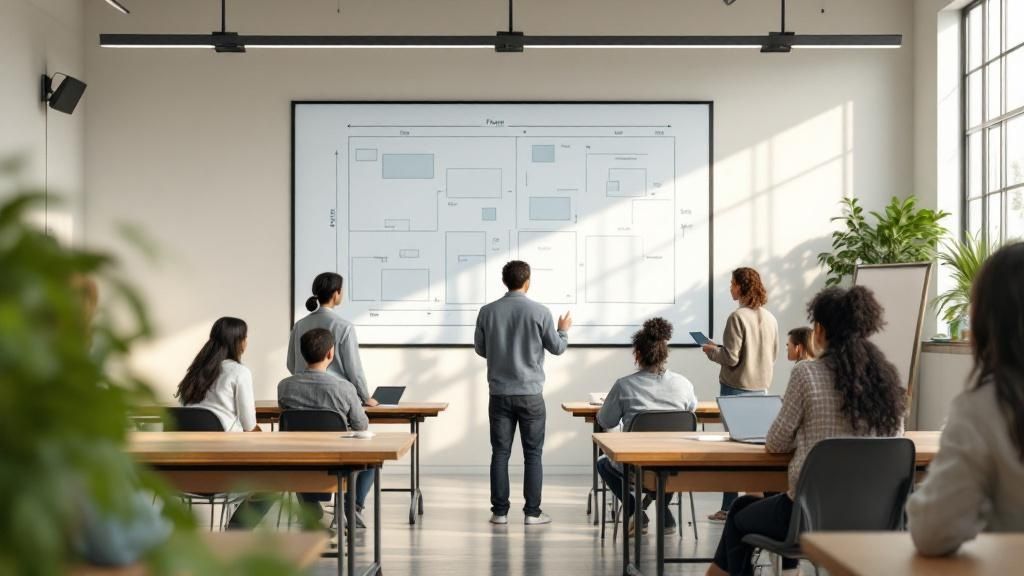
- Interactive Whiteboard Problem-Solving: We use large whiteboards not just for writing, but for movement. Tutors will get students to stand up, grab the pen, and physically work through maths problems or map out story structures. This simple shift turns sedentary work into an active, full-body thinking process.
- STEM with Physical Manipulatives: Abstract science and maths concepts suddenly become much clearer when students can physically hold and manipulate them. We might use building blocks to explain algebra, molecular model kits for chemistry, or even everyday objects to demonstrate physics principles.
- Humanities Through Role-Playing: To make history or literature really stick, we use role-playing to act out pivotal historical events or key scenes from a novel. This helps students connect with the material on an emotional and physical level, cementing details far more effectively than just reading from a page.
We don't just talk about learning theories—we live them. Our goal is to create personalised, effective experiences that help every student thrive by working with their learning style, not against it.
An Evidence-Based Approach
Our methods are backed by solid educational principles. In fact, evidence from Australian higher education highlights that kinesthetic learning is an underutilised yet highly promising approach for boosting student engagement and performance. Research has consistently shown that incorporating physical activities and interaction leads to marked improvements in student participation and concept retention. You can discover more insights about these findings and see exactly why this active approach is so effective.
By championing what is kinesthetic learning through these proven strategies, we help students build not just knowledge, but also a genuine enthusiasm for their studies. If you're interested in learning more, our guide on encouraging a passion for learning offers even more tips. At Evergreen, our mission is to make every lesson a memorable and impactful experience.
Frequently Asked Questions About Kinesthetic Learning

As you start to explore what is kinesthetic learning, it’s perfectly normal for a few questions to surface. It’s a style that champions getting physical and hands-on, which can feel miles away from the traditional ‘sit and listen’ classroom model. So, let’s tackle some of the most common queries to give you a clearer picture.
Can a Person Have More Than One Learning Style?
Yes, absolutely. In fact, it's incredibly rare to find someone who fits neatly into a single learning style box. Most of us are a blend of all the learning preferences—visual, auditory, reading/writing, and kinesthetic—though we usually have one or two that feel the most natural.
Think of it like being right- or left-handed. You have a preferred hand you automatically use for writing, but you still use your other hand for countless other tasks throughout the day. In the same way, a student might be a dominant kinesthetic learner who gets the most out of hands-on projects, but they can still absorb information by watching a demonstration (visual) or joining a discussion (auditory).
The real goal is to pinpoint that primary style to make learning as effective as possible. A great tutor will use that dominant preference as the main tool in their kit, while weaving in other strategies to create a truly well-rounded and robust learning experience.
Often, the most powerful approach is a mixed-modality one. A kinesthetic learner might watch a video (visual), listen to their tutor's explanation (auditory), and then immediately build a model themselves (kinesthetic) to properly lock in that new knowledge.
Is Kinesthetic Learning Only for Young Children?
This is a really common misconception, but the answer is a definite no. While we often associate hands-on activities like playing with blocks or finger painting with early childhood education, the core principles of kinesthetic learning are hugely effective for learners of all ages—right up to adults in the professional world.
The strategies simply grow up and become more sophisticated.
- University Students: A medical student isn't just learning anatomy from a textbook; they're working with anatomical models or taking part in simulated procedures to understand how the body works in a physical sense.
- Adults in Training: A mechanic doesn’t learn to fix an engine by reading a manual alone. They learn by actually getting their hands dirty, taking it apart, and putting it back together.
- Professionals: An architect might build a physical scale model to truly feel the space and flow of a building they’re designing, something a 2D drawing can't capture.
For older students and adults, kinesthetic strategies are what bridge the gap between theoretical knowledge and practical, real-world skills. The need to learn by doing doesn't fade with age; it just adapts to more complex challenges.
How Can You Support a Kinesthetic Learner in a Digital World?
With so much learning now happening on screens, it can seem tricky to support someone who needs to be physically engaged. But with just a little bit of creativity, you can transform online schooling into a much more hands-on and dynamic experience.
Here are a few practical tips to make it work:
- Use Digital Tools Actively: Instead of just passive screen time, encourage the use of a stylus and tablet for a digital whiteboard. This mimics the physical act of writing and drawing, making it far more engaging than simply typing.
- Incorporate Physical Study Breaks: Schedule short, active breaks every 20-30 minutes. This could be as simple as stretching, doing a few star jumps, or walking around the room. These little bursts of movement help reset focus and satisfy their need to move.
- Connect Online Learning to Real-World Tasks: If they’re learning about plant cells online, get them to build a model of a cell using items from around the house. If it’s a history lesson, have them draw a huge timeline on a big sheet of paper. This creates a physical anchor for the digital information.
These simple adjustments can turn a passive online session into an active one, helping a kinesthetic learner not just get by in a digital environment, but genuinely thrive in it.
At Evergreen Tutoring Services, our expert tutors are skilled at identifying each student's unique learning profile and creating personalised sessions that get results. Whether it's online or in-person, we know how to make learning active, engaging, and effective. Discover how our personalised tutoring can help your child succeed.